
Rubbish Mountain
A gigantic pile of rubbish was dumped in a field in Oxfordshire. The response sums up everything wrong with British bureaucracy.

Photos and videos of the great Oxfordshire rubbish mountain don’t do it justice. Early media reports gave the impression that waste - mostly plastic, card and paper from commercial properties it seems - was simply tipped into a field; but that’s not exactly true. Great earthworks up to ten feet tall were constructed at the site last spring to contain the rubbish. Excavators must have worked for weeks, shifting hundreds of tons of earth to construct a rudimentary landfill site surrounded by berms. You can even see a digger in historical images from Google Earth, from June. A small farmer’s gate was converted into a tarmacked entrance for heavy goods vehicles, allowing them to enter the field in plain view from a slip road off the A34.
You can see a short film accompanying this piece via YouTube, below.
Eyewitness reports speak of convoys of lorries turning up at the site, delivering the rubbish to waiting excavators that moulded it into the extraordinary monument we see today. When I visited the area last weekend I estimated the pile to be around 170m long (roughly the length of the Gherkin in London), 12m wide and perhaps 5 or 6 deep, making it somewhere north of ten thousand cubic metres in size. It would take four or five hundred of the largest bin lorries to shift it all. This was not a few dodgy geezers in white vans but a large criminal operation that must have involved dozens of people.
The sheer scale of the crime scene makes its location rather ironic, because this giant landfill sits just twelve hundred yards from the headquarters of Thames Valley Police in Kidlington, just north of Oxford. In fact visiting the town was a surreal experience in its own right - the local Sainsbury’s is such a notorious crime spot that the supermarket has installed a highly-visible CCTV monitoring station in front of the exit, with a uniformed guard watching TV screens as you wander by with your shopping. Presumably this security theatre is supposed to comfort shoppers, but it made the place feel like some lawless outpost, a town in visible decline.
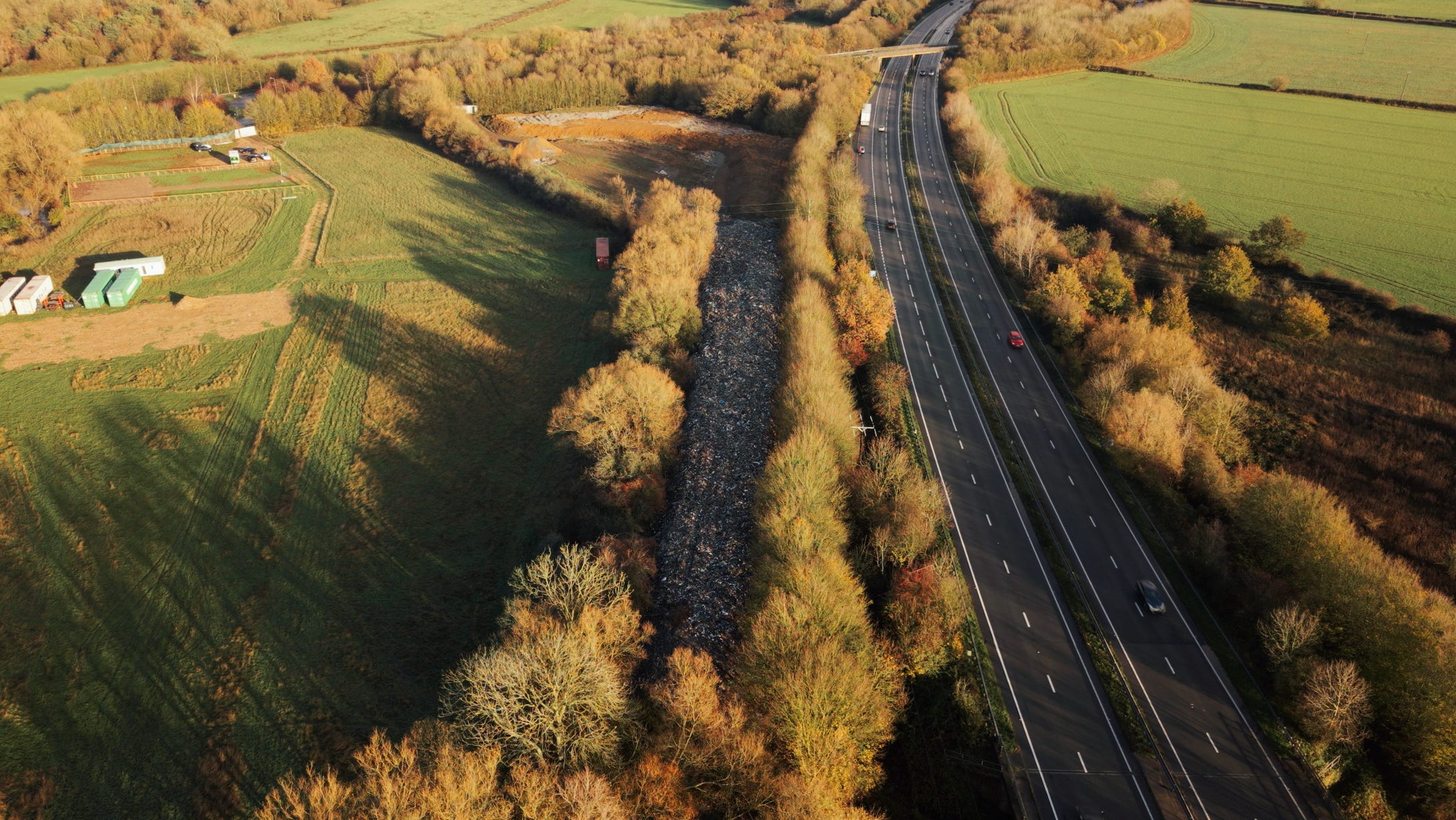
In fairness to the police, it’s hard to imagine a more convenient or secluded site to carry out this crime. Surrounded by trees, it was completely screened off from view until leaves began falling in the Autumn. In theory a public footpath crosses the land, but in practice nobody would ever walk down it - one end is hidden behind a crash barrier on the main road half a mile out of town, while the other terminates at the end of a field in the middle of nowhere, coming out on a small road with no parking nearby and no other paths to connect with.
In any case, Thames Valley Police have shown little interest in the crime - perhaps too busy with the local Sainsbury’s - and the job of dealing with it has fallen to the Environment Agency, the public body responsible for waste crime. They swung into action at the start of July, and in the spirit of being as fair as I possibly can, I’ll tell you their side of the story first.
The Agency claim their response was swift and overwhelming. As soon as they were aware of the site they sent officers to inspect it, arriving on July 2nd. Faced with an industrial-scale operation and thousands of tons of rubbish they concluded that it was a “high-risk illegal waste site requiring urgent action.” This action came in the form of a strongly-worded letter, a cease-and-desist order sent just four weeks later on July 31st.

This should have been enough to put a stop to the dastardly deed, but to their apparent surprise the tipping continued. “When the risk of further dumping emerged,” they explain, “we secured a court order to close the site to prevent more waste from being illegally tipped.” For some reason their statement doesn’t mention when this was obtained, so let me helpfully clarify that it was October 23rd, a mere 113 days after their visit.
According to their most recent statement,“We have secured the site with Heras fencing to prevent entry to this active crime scene and employed 24-hour security on site.” Again the dates are rather vague: this took place at the end of November, mere days after Oxfordshire’s newest geographical feature went viral and the Prime Minister was compelled to make a statement about it. Work to protect the River Cherwell, which runs just a few metres to the south of the pile and ultimately feeds into the Thames, only seems to have begun in the last week or so.
It’s true that the Environment Agency can’t act on something that hasn’t been reported to them, and it’s also true that by the time they made that first visit to Oxfordshire much of the rubbish had already been dumped - you can see this from aerial comparisons in the YouTube video I posted. But the fact remains that every time the Agency had an opportunity to take decisive action to get ahead of the incident, they failed to grasp it.
Why, for example, did they not inform the media of the site back in July, and why did they wait more than four months to make any kind of public statement about it? Why was it only in the last half of November that they finally issued an appeal to the public for information to catch those responsible? Why did it take four weeks to issue a simple cease-and-desist order, and the best part of four months - and further reports of tipping - to seek a court order to shut the site down? Why was a critical incident - ‘Operation Nation’ - only declared after the story broke in the media in late November? Did the mountain somehow become more serious once people had seen it on the news?
Why were measures to protect the River Cherwell only considered recently, with the Agency deploying sandbags for the first time only in the last week, after days of heavy rain? And why is it only now that the Environment Agency are ‘considering options’ to remove the rubbish, having previously insisted that they were not responsible for doing so, pursuing the derisory line that ‘the criminals would clear it up’, as if that were ever a serious short-term prospect in what they now describe as a ‘complex’ investigation that will ‘take time’?
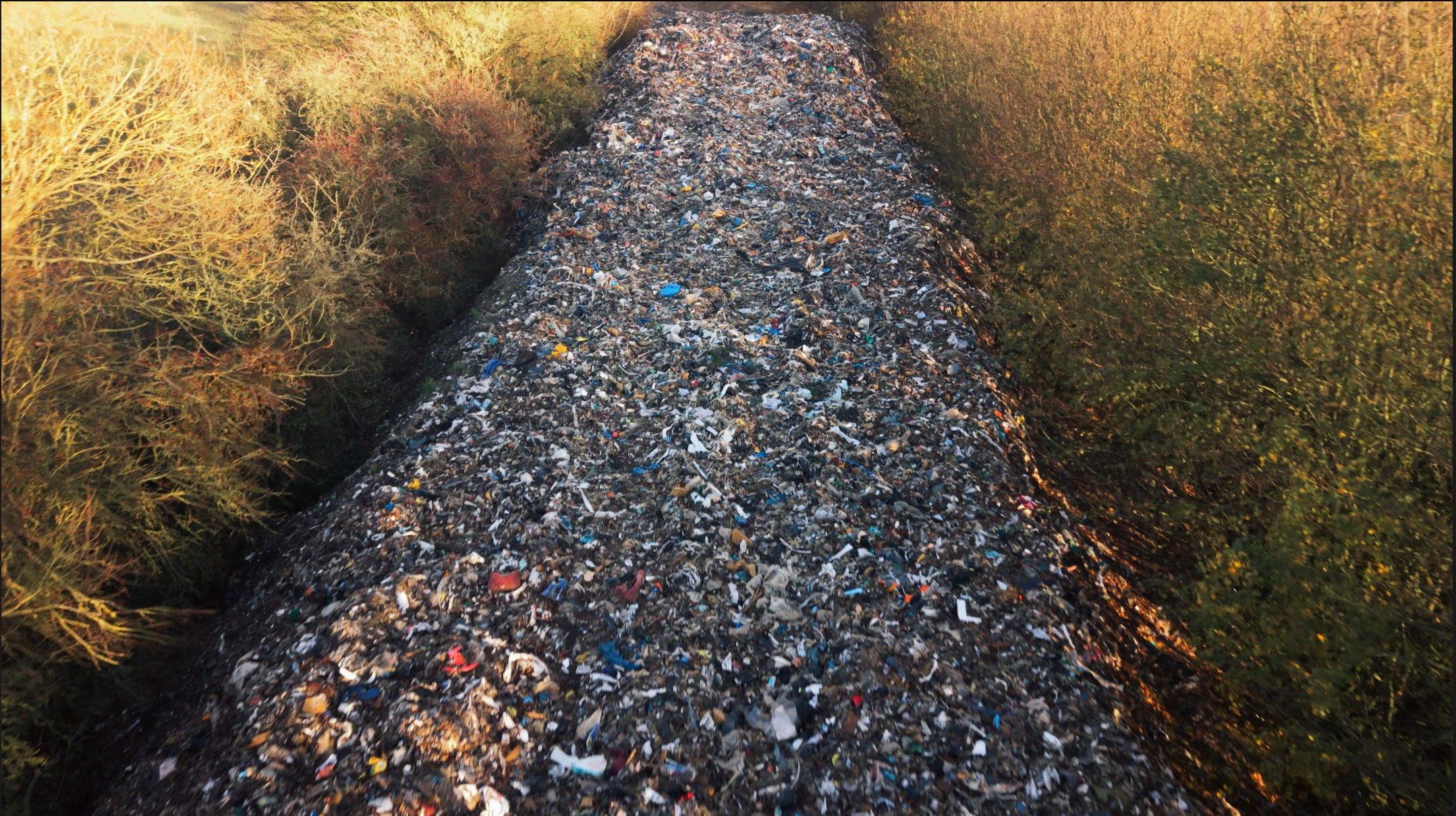
Whether or not the criminals ultimately pay for it, the site obviously needs to be dealt with, and anyone with an ounce of sense would decouple those things: arrange for the site to be cleaned up, and then seek to recover the costs later. Cherwell Council can’t do this because they don’t have the money - estimates suggest it would cost more than their entire annual budget to clear up the site - so ultimately this is the job of national government to fix, and the institution best placed to spearhead that effort is the Environment Agency.
If the public sector operated with a culture of trust and ownership, this would be simple: they would clear up the site and worry about budgetary risks later. Instead, we face a repeat of what happened at Hoads Wood in Kent, the site of a similar illegal tip where locals have had to battle for years to see anything done.
In that instance, residents reported dumping over the summer of 2023 (and reports of concerning activity go back as far as 2020), but they were sent on a bureaucratic merry-go-round, lobbying the police and local council to little effect until the Environment Agency belatedly visited the site in January of 2024. It took until May of that year for the government to essentially order the EA to clear up the site, and a further six months after that for a contract to be awarded for the job. Work didn’t start until June 2025 and isn’t expected to finish before the summer of 2026 - 3 years after the police advised concerned residents watching convoys of trucks destroy an SSSI that they should ‘go and speak to the council instead’.
Ultimately crimes like this are an inevitable consequence of waste taxes introduced with little or no enforcement to back them up. A recent Lords report estimated that, “waste crime costs the UK economy £1bn a year in clean-up, enforcement costs and lost revenues to legitimate businesses and the taxman – with up to £150m evaded in landfill tax alone.” Indeed one of the tax-raising measures that was scrapped for last month’s budget was a proposed 3,000% increase in the landfill tax on builders which would have added something like £20k to the cost of a typical new build home. Leaving aside the madness of that proposal from a government trying to build for houses, it’s pretty obvious that with little or no enforcement, much of that waste would have simply been dumped in places like Kidlington or Hoads Wood.

The Environment Agency insist that “We have the resources, expertise and determination to deal with this situation effectively.” This, to put it mildly, was not the opinion of the Lords Environment and Climate Change Committee in their blistering letter to Emma Reynolds, the Environment Secretary, last month. In their view, “it is difficult to conclude that incompetence at the Environment Agency has not been a factor.”
“We have heard credible evidence of numerous specific examples of the failure of the Environment Agency to: pursue repeated reports of serious waste crime; effectively utilise the powers available to it to stop the mass, illegal dumping of waste; and bring effective, timely and successful prosecutions against the perpetrators of serious and organised waste crime.”
Disinterested police forces fared little better: “We are unimpressed with the lack of interest shown by the police in fulfilling their role by bringing to bear their expertise in tackling serious and organised waste crime, which is a subset of, and gateway to, other forms of serious and organised crime including drugs and money laundering and was described as “the new narcotics” by the former CEO of the Environment Agency.”
Meanwhile, a giant pile of rubbish squats on an Oxfordshire field like a giant monument to government inaction, challenging someone - anyone! - to take responsibility for shifting it. It seems that for Britain’s creaking, risk-averse bureaucracies the real danger isn’t damage to the environment, rubbish falling into the river, or criminal gangs running rampant in rural Oxfordshire: it’s that they might be made accountable for dealing with a difficult problem. That, it seems, is something to be avoided at all costs.
It’s hard not to draw a line between incidents like this and our general national malaise. At a time when government is asking a lot of people - pay more tax, do your recycling properly, refloat the public sector - this feels like a colossal failure to fulfil their side of the bargain. What exactly are all of these cameras, ANPR systems, drones and databases for if they can’t detect hundreds of trucks barrelling down the A34 every day, dumping rubbish on an industrial scale? Why do we pay for all these institutions if their default response to any problem is ‘can’t!’
A while ago I wrote about perceptions of crime, and why the public are dissatisfied with policing even while the statistics tell us things like robbery and violent crime are at record lows, and sorry to quote myself but:
“When the public say they feel that crime is increasing, it’s not because they’re too dumb to understand the difference between The Bill and real life; they’re telling you about real things that they experience, the intense frustrations these cause, and a sense that the authorities don’t really care. Maybe crime numbers are down, but a feeling of lawlessness has grown and been allowed to fester, and preventing that is literally the second duty of any government after ‘don’t get invaded’.”
Somehow we’ve created a culture where a sprawling proliferation of quasi-police agencies - The Quasi! - can catch and fine a woman for tipping coffee down a drain but gangs carrying out industrial-scale crimes like organised phone theft or illegal landfilling are allowed to continue on their merry business, largely untroubled. It is a fundamental erosion of the unwritten contract between the British public and the law, and it should be unsurprising that it is creating a culture of deep ambivalence to the idea of government as an agency for good.
People act as if public sentiment is some big mystery, as if the rise of populism is some unexplained global phenomenon driven by trends outside our control. But just showing that the government can do some basic things right would go a long way towards giving it more credibility. Moving that pile of rubbish sometime before the next election would be a good start.
Please do like, subscribe, etc. And check out the accompanying short film on YouTube, below. This is the second experiment in ‘pivoting to video’, and I’d love to hear any ideas for future episodes looking at the impact of bureaucratic failure on our landscape…
Apparently the public sector and its tax hikes are responsible for this rubbish dump, even though it was put there by private sector tax evaders. The government that cut the public sector agencies so much that they can't function effectively is not to blame. Apparently it is the actually the fault of the agencies that were cut.
There must have been many people working for various authorities who thought it was all just boring routine and continued to go to conferences, meetings about team morale and pop-off home early on Friday as the tireless criminals laboured on.